An authoritative review of material science, microbial barrier performance, and global validation parameters under ISO 11607 and EN 868.
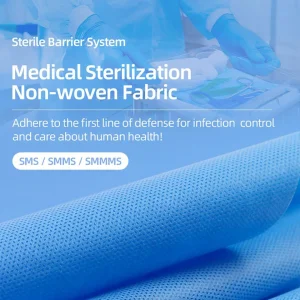
Within the global healthcare landscape, maintaining the sterility of surgical instruments and clinical medical devices from the point of sterilization to the point of use is a foundational pillar of patient safety. A Sterile Barrier System (SBS) is not simply packaging; it is a critical medical device accessory designed to allow sterilization agent penetration, resist physical breaches during handling, prevent microbial ingress over extended shelf lives, and facilitate clean, aseptic presentation at the operating table.
For medical device manufacturers (MDMs) and procurement managers of Tier-1 healthcare facilities, selecting high-quality sealable pouches for sterilization requires comprehensive knowledge of regulatory pathways. Globally, the design, manufacturing, and verification of these systems are governed by international consensus standards such as ISO 11607-1/2 ("Packaging for terminally sterilized medical devices") and the European equivalent series EN 868.
Regulatory Core Concept: ISO 11607 Part 1 dictates material testing, microbial barrier validation, and shelf-life verification. Part 2 mandates process validation requirements for forming, sealing, and packaging processes. Any supplier selected must prove continuous compliance with both parts.
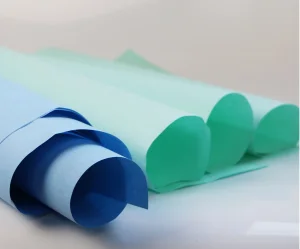
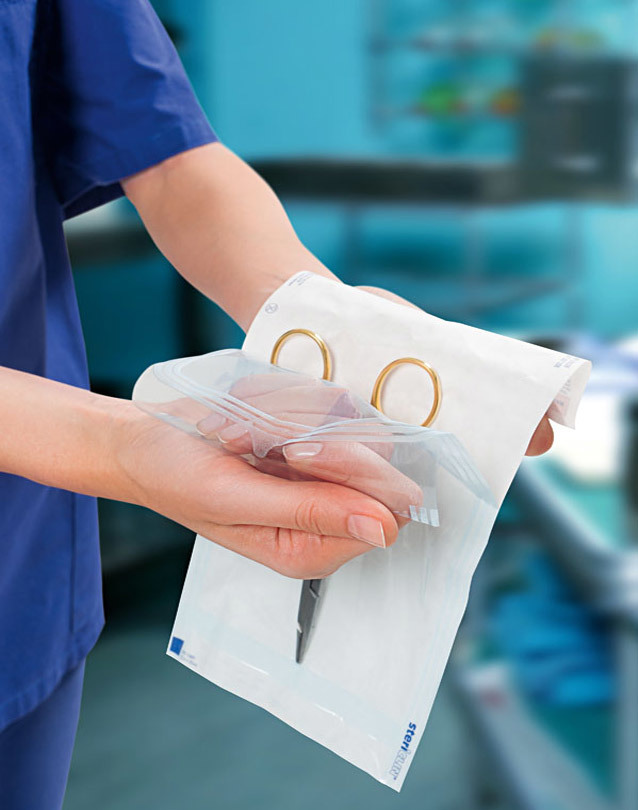
The mechanical performance of a sealable sterilization pouch is dictated by its materials and seam construction. Typically, these pouches are built utilizing a hybrid structure: a heavy-duty, porous web (medical-grade paper or high-density polyethylene fibers like DuPont™ Tyvek®) combined with a non-porous, transparent laminate plastic film (PET/PP or PET/PE).
This design serves two functions. The porous substrate allows sterilant gases (such as Steam, Ethylene Oxide (EO), or Vaporized Hydrogen Peroxide (VHP)) to enter and exit the chamber, while the laminate film offers complete visibility of the internal components and indicator cards. High tensile strength, clean peelability (no fiber shredding upon opening), and resistance to puncture are the primary benchmarks of excellence in this product segment.
As a premier manufacturer and supplier, Guangzhou Jalil Medical Co., Ltd. specializes in the development and distribution of high-performance medical sterilization packaging and tape for clinical institutions, dental clinics, and research laboratories worldwide. Backed by extensive experience in infection control, Jalil Medical consistently delivers solutions that protect medical instrument integrity and bolster healthcare safety.
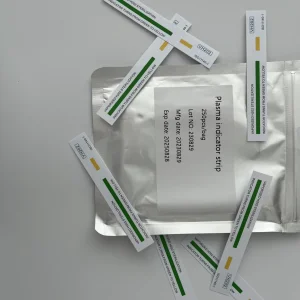
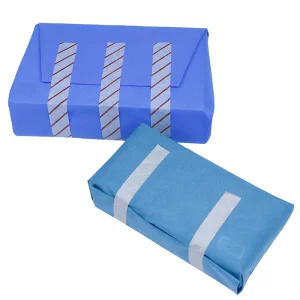
Operating modern, ISO-certified production facilities, Jalil Medical leverages advanced fabrication machinery and rigorous QC routines to supply sterile pouches, autoclave sterilization wraps, chemical indicator strips, and specialized tapes. These solutions meet and exceed critical benchmarks, including CE, ISO 13485, and national medical device standards.
By prioritizing raw material selection and production precision, Jalil Medical accommodates complex medical distribution networks via OEM and ODM services. Whether a client requires bespoke dimensioning, custom indicator ink formulations, or specific packaging formats for complex instruments, our engineers deliver validated solutions tailored to specific operating systems.
Our solutions find wide adoption in hospitals, clinics, laboratories, and surgical suites. Integrating color-changing chemical indicators, high-barrier film combinations, and fiber-free clean-peel profiles, we protect the sterility of medical implements up to the moment of patient contact.
Evaluating supply chain variables, total cost of ownership (TCO), and regulatory alignment in international B2B procurement of sterilization consumables.
Global procurers prioritize products compliant with EN 868-5 (self-seal and heat-sealable pouches) and CE/FDA notifications. Verifiable certificates and physical testing profiles form the basis of the supplier qualification cycle.
High-volume clinical buyers and medical device OEMs require suppliers capable of handling bulk container shipments while maintaining tight batch-to-batch consistency and minimizing logistics risks.
Procuring entities are shifting toward materials that support both sterilization parameters and ecological objectives, including reduced plastic thickness and monomaterial constructions without compromising sterility.
Procurement Insight: Working directly with an integrated manufacturer like Guangzhou Jalil Medical minimizes intermediate agent costs and provides direct access to critical quality verification, dye penetration test results, and seal strength evaluation data sheets.
An operational guide to aligning medical substrates with sterilant processes and validation limits.
| Pouch Substrate Type | Compatible Sterilization Cycle | Chemical Indicator Behavior | Key Regulatory Standards | Primary Clinical Application |
|---|---|---|---|---|
| Medical Grade Paper / Film | Steam Autoclave, EO (Ethylene Oxide) | Steam: Pink to Brown/Black EO: Pink to Yellow |
EN 868-5, ISO 11607-1 | General surgical kits, dental trays, clinics |
| High-Density PE (e.g. Tyvek®) / Film | VH2O2 (Plasma/VHP), EO | Plasma: Red to Yellow/Blue | ISO 11607-1, ASTM F88 | Implantable devices, micro-surgical instruments |
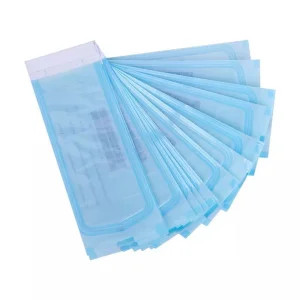
| Self-Sealing Sterilization Pouches | Steam Autoclave, EO | Dual Indicator Transition | EN 868-5, ISO 11140-1 | Chairside dental, outpatient clinics, fast turnaround |
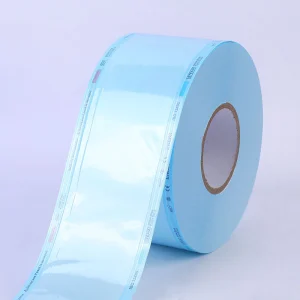
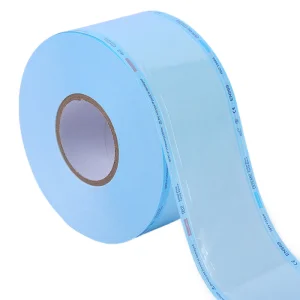
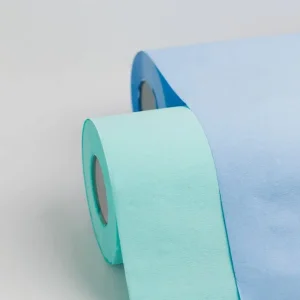
| Sterilization Reels (Flat & Gusseted) | Steam, EO, VHP (Material Dependent) | Continuous Process Indicators | ISO 11607-2, EN 868-5 | Variable-length custom instrument packaging |
A sterile barrier is only as strong as its weakest point, which is typically the seal seam. Standardized testing guarantees that sealable pouches withstand pressure variations during autoclaving (dynamic gas evacuation and injection phases) and transport stresses without leaking or rupturing. Industry standard testing protocols include:
The medical sterilization packaging industry is experiencing shifts driven by environmental policy and hospital waste mitigation strategies. Sourcing directors now actively search for eco-friendly, biodegradable, or recyclable alternatives that do not compromise microbial barrier safety.
Our engineering pipeline is exploring monomaterial designs for our film components. Standard laminate designs utilize combinations like PET and polypropylene, which are challenging to recycle. Transitioning to monomaterial co-extruded structures allows clinics to route sterile packaging into recycling streams after clean separation.
Additionally, we are evaluating solvent-free ink formulations for process indicator strips. Traditional chemical indicators depend on lead or heavy-metal based formulas to achieve color transition under exposure to high temperature, pressure, or gases. Modern packaging designs utilize water-based, heavy-metal-free inks that meet ISO 11140-1 Class 1 accuracy requirements while minimizing waste hazards.
For large healthcare institutions, efficiency in the Central Sterile Supply Department (CSSD) directly affects operating room utilization rates. Standardizing sealable pouches and packaging sizes reduces material waste, accelerates packing times, and limits packaging related cycle delays.
Through our product design support services, Jalil Medical consults with hospital logistics teams to design customized kits. This systematic approach ensures clinical staff have the correct pouch specifications (whether flat reels, gusseted reels, or self-seal bags) for each instrument set, reducing operational friction.
Expert responses to critical design, compliance, and material performance questions for sterilization packaging.
 Jalil Medical