Explore our industrial-grade biological indicators, medical sterilization packaging, and chemical monitoring cards manufactured to ISO 11138 standards.
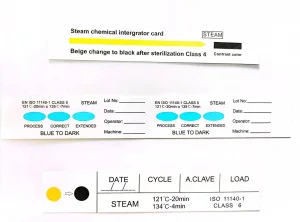
Guangzhou Jalil Medical Co., Ltd. is a leading manufacturer and supplier specializing in medical sterilization packaging and tape for healthcare facilities worldwide. With years of experience in the infection control and medical packaging industry, we provide high-quality solutions that ensure the safety and sterility of medical instruments. Our product range includes sterile pouches, autoclave sterilization wraps, chemical indicator strips, and sterilization tapes, all designed to meet rigorous international standards.
Committed to quality and innovation, Jalil Medical operates modern ISO-certified production facilities, combining advanced machinery with strict quality control to deliver consistent, reliable products. We support OEM and ODM services, allowing healthcare providers and distributors to access customized solutions that meet specific operational and regulatory requirements.

Understanding the shift toward automated sterility assurance, regulatory mandates, and global market dynamics.
In modern hospital Central Sterile Supply Departments (CSSD), pharmaceutical processing cleanrooms, and medical device manufacturing, biological indicators (BIs) represent the gold standard of sterilization monitoring. Unlike physical parameters (temperature, pressure, time) or chemical indicators (color-changing reactive dyes), biological indicator devices directly assess the lethal capability of a sterilization cycle using direct microbial challenge. They contain bacterial spores known for their high resistance to specific sterilization modalities, such as Geobacillus stearothermophilus for steam and vaporized hydrogen peroxide (VH2O2), and Bacillus atrophaeus for ethylene oxide (EO) and dry heat processes.
The global market for biological indicators is undergoing unprecedented expansion, fueled by stricter healthcare-associated infection (HAI) prevention protocols, stringent FDA 21 CFR Part 820 quality systems, and ISO 11138/11140 compliance guidelines. Overseas medical institutions, contract sterilization facilities, and industrial pharmaceutical companies are shifting from traditional 24-48 hour incubation protocols to rapid-readout fluorescence self-contained biological indicators (SCBIs). These rapid systems utilize enzyme-substrate fluorometric reactions, providing conclusive sterility assurance in as little as 20 to 60 minutes. As a result, supply chains are seeking highly reliable, high-volume production partners capable of maintaining precise spore population counts ($10^5$ to $10^6$), predictable D-values (decimal reduction time), and robust physical device packaging.
BIs are engineered to validate a $10^{-6}$ Sterility Assurance Level, ensuring less than one-in-a-million probability of a non-sterile unit post-cycle.
Modern SCBIs utilize enzymatic cleavage of 4-methylumbelliferyl-$\beta$-D-glucoside to detect active bacterial enzymes long before visual outgrowth occurs.
Full alignment with ANSI/AAMI/ISO 11138-1 through 5, ensuring seamless integration into FDA, CE, and NMPA registered validation workflows.
How Chinese biological indicator manufacturers deliver scalable throughput, technical precision, and cost efficiencies.
China has established itself as the global manufacturing epicenter for infection control devices, medical barrier packaging, and chemical/biological sterilization indicators. Over the past decade, Chinese producers have transitioned from basic OEM converting to sophisticated biosensor design and biological strain culturing. The structural advantage of sourcing biological indicator devices from top Chinese manufacturers lies in complete vertical supply chain integration—from micro-injection molded plastic vials, borosilicate glass growth medium ampoules, and medical non-woven carrier filters, to bio-cleanroom filling lines and automated optical inspection.
Through robust domestic sourcing of high-grade raw materials (such as medical-grade polypropylene, high-barrier Tyvek®, and pure spore strains), Chinese enterprises maintain exceptional production resilience and cost control. Modern Chinese facilities feature Class 100,000 (ISO 8) cleanrooms equipped with precise microbial dosing automation that ensures exact carrier loading ($1.0 \times 10^6$ spores per strip or disc). This structural synergy enables global medical device brands, healthcare distributors, and contract sterilizers to reduce procurement costs by 30% to 50% while meeting or exceeding Western performance standards.
| Evaluation Parameter | Tier-1 Chinese Manufacturers (e.g., Jalil Medical) | Traditional Western Brands | Impact on Procurement Strategy |
|---|---|---|---|
| Spore Population Consistency | $10^5$ to $10^7$ verified via spectrophotometry & plate count | $10^6$ standard baseline | Equivalent microbiological kill-rate challenge accuracy |
| D-Value Control Range | Steam (121°C) $\ge 1.5$ min; VH2O2 custom tuned | Fixed D-value options | Greater flexibility for custom industrial cycles |
| Incubation Readout Time | Rapid Fluorometric (20-60 min) / Visual (24 hrs) | Rapid Fluorometric (24-60 min) / Visual (24 hrs) | Direct drop-in compatibility for existing auto-readers |
| Lead Times & Capacity | 2–3 Weeks; Scalable up to 10M+ units/month | 6–12 Weeks; Subject to regional allocation | Eliminates stockout risks in high-capacity CSSD units |
| OEM / ODM Customization | Full custom branding, private label, & customized packaging | Strictly limited or cost-prohibitive | Enables distributors to build proprietary market equity |
Deconstructing the mechanics of self-contained biological indicators, chemical strips, and sterilization packaging barrier matrices.
SCBIs integrate a bacterial spore-inoculated carrier strip and a hermetically sealed glass ampoule containing modified Tryptic Soy Broth with a pH indicator dye (bromocresol purple) or fluorometric substrate. Upon cycle completion, the inner ampoule is crushed, allowing the broth to submerge the spores during incubation. Growth causes a metabolic color change or enzyme fluorescence, indicating cycle failure.
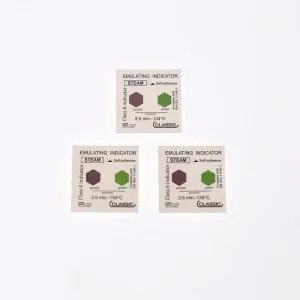
Chemical indicators monitor physical cycle parameters. Class 5 Integrating Indicators react to time, temperature, and steam saturation, correlating closely with biological spore destruction curves. Class 6 Emulating Indicators are cycle-specific, designed to react only when precise critical variables (e.g., 134°C for 3.5 minutes) are achieved within the sterilization chamber.
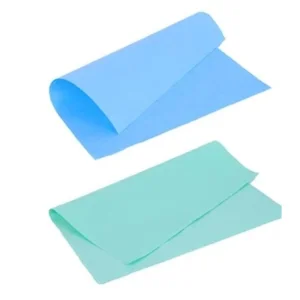
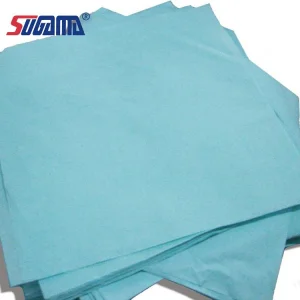
Complementing monitoring indicators are medical wrapping barrier materials (SMMS non-wovens, medical crepe paper, peelable pouches). These medical fabrics maintain complete microbial barrier integrity post-sterilization while facilitating rapid sterilant penetration during steam or low-temperature hydrogen peroxide gas plasma cycles.
Tailored monitoring workflows across acute healthcare, pharmaceutical cleanrooms, and commercial OEM kit manufacturing.
In central sterile processing departments, SCBIs are routinely placed inside Process Challenge Devices (PCDs) or Bowie-Dick test packs. Every load containing implantable medical devices requires biological indicator clearance before release into surgical operating theaters to eliminate post-operative infection risks.
Aseptic filling lines and biological containment cleanrooms rely on specialized carrier-based BIs (such as stainless steel coupons or glass threads loaded with G. stearothermophilus) to validate Vaporized Hydrogen Peroxide (VHP) decontamination cycles in isolators and pass-through chambers.
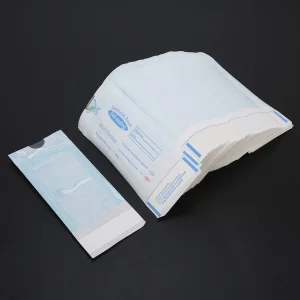
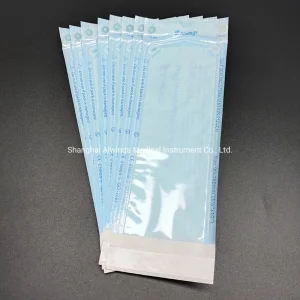
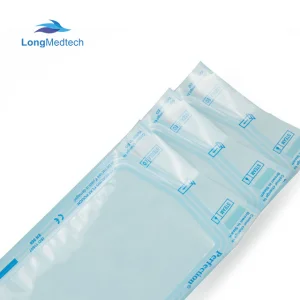
Compact tabletop autoclaves require rapid biological verification to ensure fast turnover of critical dental instruments. Cost-effective biological indicator cards, self-sealing sterilization pouches, and indicator tapes provide immediate visual assurance for daily routine release.
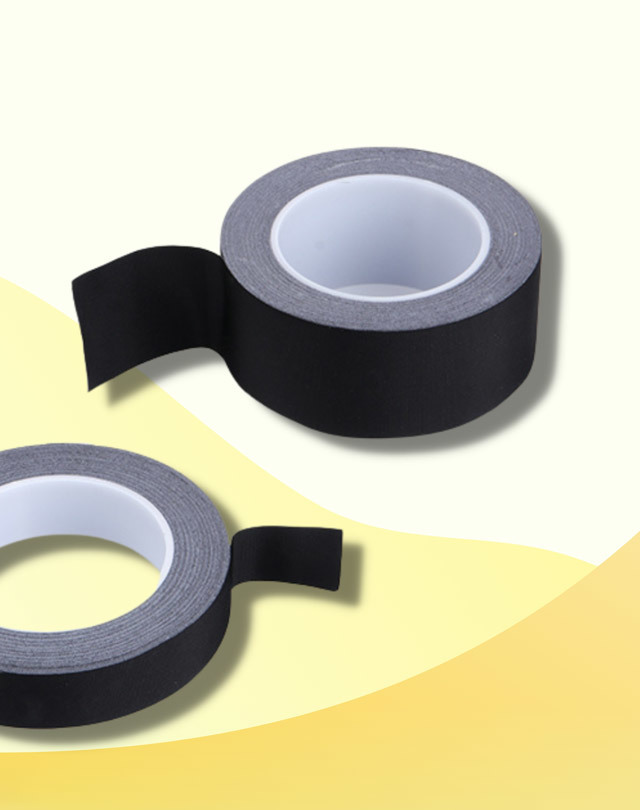
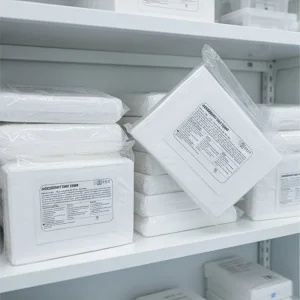
Our products are widely used in hospitals, clinics, laboratories, and surgical centers, helping healthcare professionals maintain infection-free environments. By integrating cutting-edge materials, color-changing indicators, and peelable packaging designs, we enhance usability and safety, ensuring instruments remain sterile until use.
At Guangzhou Jalil Medical, our mission is to provide trusted, cost-effective, and environmentally responsible sterilization packaging solutions. We pride ourselves on excellent customer service, timely delivery, and continuous innovation to meet the evolving needs of the healthcare industry. Whether for small clinics or large hospitals, Jalil Medical is a reliable partner for high-quality medical sterilization packaging and tape.
A structured checklist for international procurement officers, quality control directors, and regulatory affairs specialists.
When selecting a Chinese manufacturer for biological indicator devices and medical barrier packaging, international buyers must navigate technical, regulatory, and logistical criteria. The procurement protocol must extend beyond basic unit price considerations to evaluate microbiological stability, lot-to-lot repeatability, and international regulatory filings.
Verify that each manufactured lot comes with a comprehensive CoA detailing initial spore population ($N_0$), verified D-value, Z-value, survival time, and kill time under standardized conditions (EN ISO 11138-1).
Ensure the manufacturer uses climate-controlled packaging for shipping biological indicators. Culture media must be protected against thermal shock during export to maintain enzyme activity and growth medium nutrients.
Audit the supplier's Quality Management System (QMS). Premium manufacturers maintain ISO 13485 certification, ISO 11607 packaging compliance, and CE mark declarations for class-registered sterile devices.
How next-generation biological monitoring technology is reshaping infection control protocols.
The infection control sector is advancing toward digital connectivity, ultra-rapid readout capabilities, and sustainable materials. Key innovations transforming the industry include:
Expert technical insights addressing common queries regarding biological indicator devices and sterilization monitoring.
A Biological Indicator (BI) uses live bacterial spores to directly demonstrate whether conditions in a sterilization chamber were sufficient to kill resistant microorganisms. A Chemical Indicator (CI) monitors physical variables (such as temperature, steam saturation, or time) using chemical dyes that change color when exposed to specific conditions. BIs provide direct biological proof of sterility assurance, whereas CIs provide physical cycle feedback.
Steam autoclaves and Vaporized Hydrogen Peroxide (VH2O2) sterilizers utilize Geobacillus stearothermophilus spores due to their extreme heat resistance. Ethylene Oxide (EO) gas and Dry Heat sterilization processes utilize Bacillus atrophaeus spores, which offer high resistance to chemical alkylation and dry heat desiccation.
According to ANSI/AAMI ST79 standards, biological indicators should be used at least daily, preferably in every load for steam sterilizers, and in every load containing implantable medical devices. For low-temperature sterilizers (VH2O2 and EO), BIs should be processed in every load cycle to ensure complete sterility assurance.
The D-value (decimal reduction time) defines the time required at a specific temperature and sterilant concentration to reduce the viable spore population by 90% (or 1 log unit). For instance, a steam BI with a D-value of 1.5 minutes at 121°C requires 1.5 minutes of continuous exposure to eliminate 90% of the active spore count.
Yes. Premium Chinese manufacturers engineer self-contained biological indicators (SCBIs) to standard physical dimensions and optical excitation wavelengths (e.g., 365 nm UV fluorescence excitation). They are fully compatible with standard auto-readers and standalone incubators available on the market.
Leading manufacturers like Guangzhou Jalil Medical offer complete OEM/ODM options. This includes custom branding on packaging, personalized indicator strip dimensions, private-label printing on self-sealing pouches, custom D-value formulation for industrial clients, and specific secondary carton configurations.
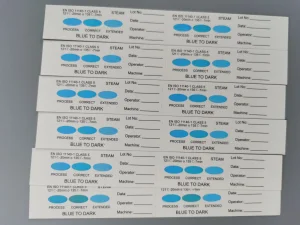
Additional infection control components, class-6 indicator strips, and high-barrier medical packaging solutions.

 Jalil Medical