Why do some hospitals prefer autoclave rolls over pouches? The answer often comes down to flexibility, workflow, and the instruments being prepared. Rolls let staff cut packaging to suit different item lengths, from a slim forceps to a longer surgical instrument. A clear film side can help identify the contents, while the paper side supports the sterilization process when used as directed. Small details matter. A neatly sealed pack is easier to handle than one that is oversized or awkwardly folded.
That flexibility can also help departments manage storage and keep a range of pack sizes available. But rolls require staff to measure, cut, and seal each package, so they may add steps during busy shifts. Preformed pouches can be quicker for items that fit their standard sizes. Neither option is automatically safer or more efficient. The right choice depends on the instruments, the sterilization method, staff training, and the manufacturer’s instructions. A practical comparison should consider seal quality, package integrity, traceability, and how packs are inspected and stored. There is no perfect format. Even a familiar routine deserves review. This article explores why some hospitals choose autoclave rolls, where they can offer practical advantages, and what teams should weigh before changing their packaging workflow.
Understanding Autoclave Rolls in Hospital Sterilization
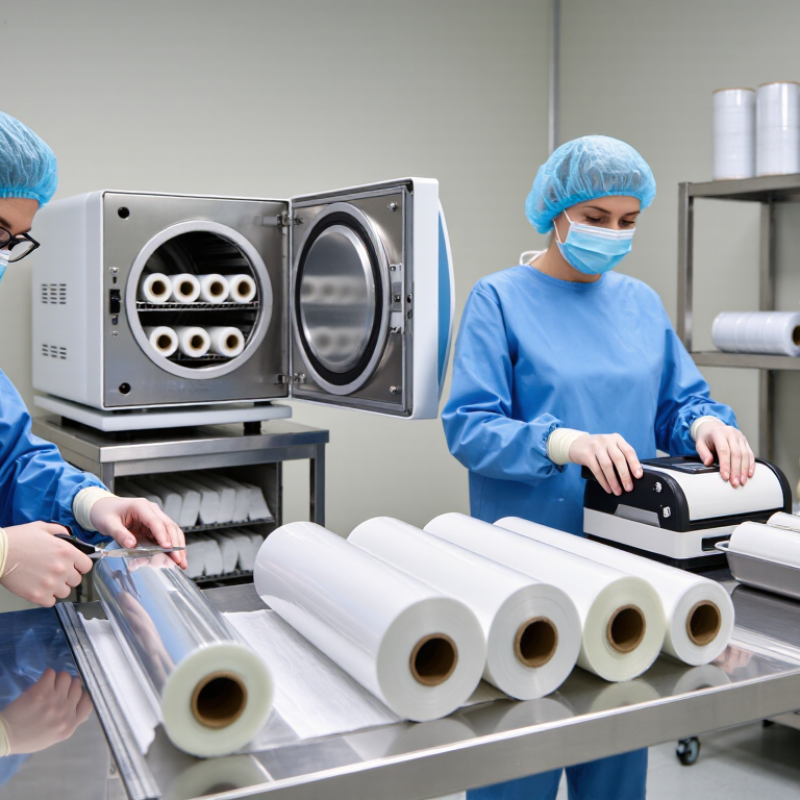
Autoclave rolls are continuous, heat-sealable packaging made for steam sterilization. Staff cut each length to fit the instrument set, leaving room for safe opening after processing. The clear film makes contents visible, while the paper side allows steam to enter and supports drying. That flexibility can reduce unused packaging around unusually sized items. It also means staff must create and inspect each seal carefully. Small details matter.
Packaging is only one part of a validated process. The CDC’s Guideline for Disinfection and Sterilization in Healthcare Facilities (2008) describes common steam cycles, including 121°C for 30 minutes in a gravity-displacement sterilizer and 132°C for four minutes in a dynamic-air-removal sterilizer, for specified wrapped loads. These are not universal settings; load type and equipment instructions determine the correct cycle. The same CDC guidance recommends biological-indicator testing at least weekly and with every load containing implants. Rolls do not replace those checks. Nor do they guarantee a good seal. Staff need compatible materials, validated sealing procedures, and routine inspection for channels, wrinkles, or punctures. A roll may fit a tray better than a pre-sized pouch, but cutting and sealing add steps—and those steps deserve honest review.
Hospitals often prefer autoclave rolls when instrument sizes vary from one procedure to another. Staff can cut a section to fit a short clamp or a long forceps, then seal the open end. This creates a package suited to the instrument rather than forcing every item into one standard pouch size. Less unused packaging can also make storage shelves easier to organize. Small details matter.
Custom sizing helps protect instruments during handling and sterilization. A package should leave enough room around the item without excessive excess material. For example, delicate scissors need space to avoid pressure on the blades, while a long instrument needs a pouch that keeps its tip away from the seal. The right fit can reduce movement and support clear visibility of the contents. Still, sizing is not always perfect on the first try. Staff should check the fit and follow the packaging and sterilizer instructions for each load.
Tips: Cut rolls with clean scissors, leave adequate space for sealing, and inspect each seal for gaps or wrinkles. Keep packaging consistent with the facility’s validated process. A roll offers flexibility, but it does not replace proper preparation or inspection.
Top Reasons Hospitals Prefer Autoclave Rolls Over Pouches
Clear film makes it easier to inspect packaged items before they reach a procedure room. Staff can see the instrument’s outline, confirm the contents match the label, and spot obvious moisture, debris, or damage without opening the pack. That matters. A tray of wrapped instruments may look orderly, but one torn corner or cloudy patch deserves attention. Rolls also let teams cut packaging to fit different item sizes, which can reduce excess material and make contents easier to view.
Visibility supports a careful workflow, but it has limits. A clear side cannot prove that an item is sterile, and a chemical indicator only shows exposure to certain process conditions. Staff still need to follow the sterilizer and packaging instructions, check seals, and review required cycle records. In daily practice, a quick visual check helps catch problems early, especially when packs are handled under busy conditions. It is easy to miss a small crease. That is worth remembering. Teams should inspect the full seal and both sides of each package, not just the visible instrument, and set aside anything wet, punctured, or poorly sealed for assessment.
How clear film helps staff inspect packaged items
Typical format comparison: 1 = yes, 0 = no. Clear-film versions of both rolls and pouches let staff visually check the packaged item without opening it. Rolls can be cut to suit the item, while preformed pouches are ready-made. Visual inspection does not confirm sterility; follow facility procedures for checking seals and indicators.
Top Reasons Hospitals Prefer Autoclave Rolls Over Pouches
Workflow and Storage Benefits of Sterilization Rolls
Sterilization rolls let staff cut packaging to fit each instrument set. A team can seal one end, load the items, then close the other end. This can reduce awkward gaps around long clamps or narrow trays. The transparent film also makes contents easier to identify before use. Less searching helps. Rolls may suit varied instrument sizes better than fixed-size pouches, though cutting and sealing still require care. A rushed seal is a real risk.
Storage matters after sterilization, too. The CDC’s Guideline for Disinfection and Sterilization in Healthcare Facilities advises protecting sterile packages from dust, moisture, and damage. Rolls can be stored in labeled, organized sections, so staff can find the right size without shifting a pile of pouches. The CDC also reported that about 1 in 31 U.S. hospital patients had a healthcare-associated infection on any given day in 2011. That figure does not prove one packaging format is safer; it underscores why dependable processing and package integrity matter.
Tips: Keep rolls dry and away from sinks. Label cut lengths clearly, and inspect seals for gaps or wrinkles before storage. Rotate stock by date. It is easy to overlook a small seal defect when the room is busy.
Autoclave rolls can reduce packaging costs when a hospital processes many instruments of similar sizes. Staff cut the tubing to fit each tray, rather than choosing a separate pouch for every item. That flexibility can mean fewer unused packages on the shelf. It also requires careful measuring and sealing. A rushed seal is no bargain.
Waste depends on the workflow, not just the package. Rolls may use less material for some loads, but oversized cuts create avoidable scraps. Pouches can also produce waste when staff select a size that is much larger than the instrument. Track discarded packaging for several weeks. The results may challenge assumptions, and they can differ between departments.
Pouches may be preferable for small, individual instruments or sets that need quick identification. Their transparent panels make contents easier to check, while preformed edges can simplify packing during busy shifts. For a clinic with low volume, that convenience may outweigh the cost of buying ready-made units. Whichever format is used, staff should follow the packaging manufacturer’s instructions and the facility’s validated sterilization process. A simple cost comparison should include labor, storage, sealing supplies, and discarded material—not just the price per package.
They package instruments for steam sterilization. Staff cut each length to fit a tray or instrument set.
The clear film helps staff see the contents. The paper side lets steam enter and supports drying.
Rolls can fit long clamps or narrow trays with less excess packaging. Cutting and sealing take extra care, though.
Look for wrinkles, channels, gaps, and punctures. A small flaw can matter. Busy rooms make careful checks harder.
No. The load and equipment instructions determine the appropriate cycle. For specified wrapped loads, some guidance describes 121°C for 30 minutes or 132°C for four minutes.
At least weekly, and with every load containing implants, according to the guidance described in the article. Rolls do not replace these checks.
Keep them protected from dust, moisture, and damage. Store rolls dry and away from sinks, and label cut lengths clearly.
Use labeled sections and rotate stock by date. It saves searching, but a neat shelf cannot make up for a poor seal.
Why do some hospitals prefer autoclave rolls over pouches? Rolls allow staff to cut packaging to the length needed for each instrument or instrument set, helping accommodate items of different shapes and sizes. Their clear film makes it easier to inspect packaged contents, while the roll format can support organized storage and a consistent preparation workflow. By choosing suitable lengths, teams may also reduce excess packaging compared with using a standard-size pouch for every item.
The best option depends on the instruments, storage needs, and work practices of each facility. Rolls can offer flexibility, but they require staff to measure, cut, and seal each package. Pouches may be preferable when ready-sized packaging is more convenient or when items fit their standard dimensions. Considering workflow, inspection, storage, and material use helps hospitals select the packaging approach that suits their sterilization needs.

Jalil Medical