Sterilization packaging waste includes single-use pouches, blue wraps, rigid containers, chemical indicators, labels, and protective films discarded after sterile processing. These materials protect patients, yet they also create a visible waste stream: unopened packs beside operating tables, torn wraps in procedure rooms, and mixed plastics in disposal bins. The central challenge is not removing packaging blindly. Sterility must remain reliable.
The World Health Organization reports that about 85% of healthcare waste is general, non-hazardous waste, while the remaining 15% may be infectious, toxic, or radioactive. This distinction matters. A clean, unused sterilization pouch should not automatically enter the same stream as contaminated clinical waste. Practice Greenhealth also reports that operating rooms can generate roughly 20% to 30% of a hospital’s total waste. The figures vary by facility, but the pattern is difficult to ignore.
How to reduce sterilization packaging waste? The practical answer begins with measurement. Hospitals can audit unopened items, standardize pack sizes, improve inventory rotation, and separate clean recyclable materials where local systems allow. Reusable rigid containers may reduce recurring wrap use, but their water, energy, maintenance, and repair impacts require careful assessment. Reuse is not always automatically greener.
Jodi Sherman, MD, a Yale healthcare sustainability researcher, has warned, “We can’t recycle our way out of this problem.” Her point is uncomfortable. Recycling helps, but prevention usually matters more. Better purchasing data, staff training, and supplier collaboration can prevent waste before it reaches the bin. Some assumptions still need testing. A successful program must protect sterility, control costs, and publish measurable results rather than promising easy solutions.
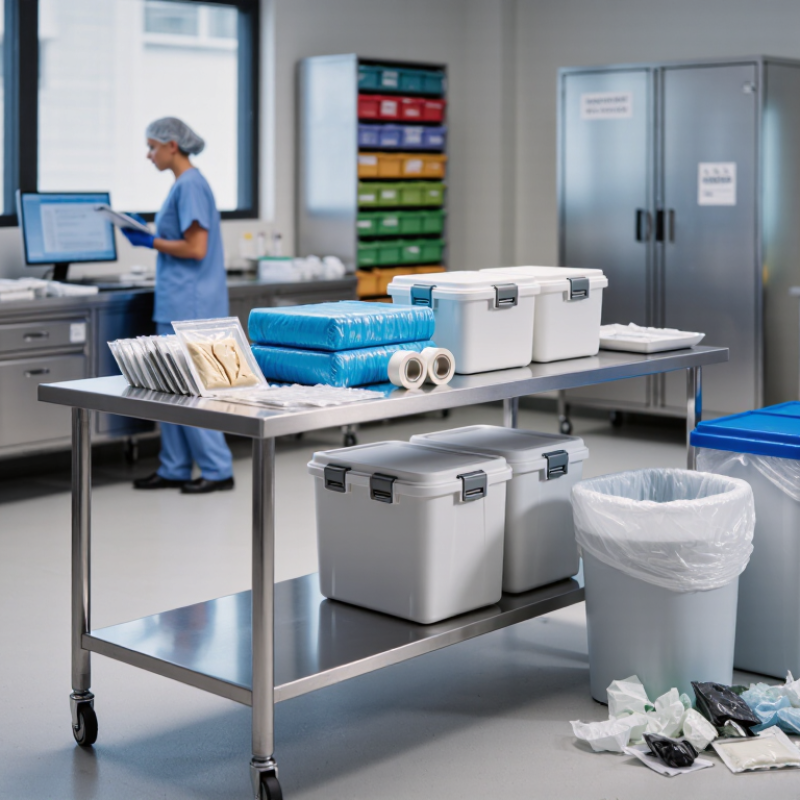
Sterilization packaging waste is the material discarded before, during, or after sterile processing. It includes paper-plastic pouches, woven wraps, rigid containers, tray liners, seals, labels, and chemical indicator strips. Unused or damaged packaging also belongs within this scope. The boundary is not always neat.
In a hospital sterilization area, staff may open a pouch beside a stainless-steel worktable and discard it immediately after removing an instrument. That pouch may look clean, while a package exposed to blood or body fluids requires a different waste assessment. Local procedures and applicable regulations determine the correct classification. Packaging waste should not automatically be treated as ordinary recyclable material.
The scope can extend beyond the operating room. It may include transport covers, storage sleeves, outer cartons, protective films, and packaging rejected during inspection. However, reusable containers are not waste after every cycle; they become waste when damaged or permanently removed from service. This distinction affects measurement and purchasing decisions.
Reduction works best when waste is measured by type and source. A sterilization department can record discarded pouches, wraps, and damaged containers for several weeks. The results may reveal overlarge pouch sizes, unnecessary double wrapping, or poor storage conditions. Staff training can reduce avoidable opening errors. Reusable rigid systems may lower single-use material, but cleaning, maintenance, and lifecycle impacts must be evaluated. Recycling claims also need verification. A material is not sustainable merely because it looks recyclable.
| Data Dimension | Definition or Typical Data | Common Examples | Waste-Reduction Approach |
|---|---|---|---|
| Scope of sterilization packaging waste | Packaging discarded after protecting, presenting, sterilizing, storing, or transporting a medical device or other sterile product. | Pouches, lids, wraps, trays, containers, protective caps, labels, and transport packaging. | Define packaging boundaries clearly and measure packaging separately from the product and clinical waste. |
| Paper and paper-based materials | Cellulose-based packaging used for sterilization pouches, indicator cards, labels, instructions, and cartons. | Medical-grade paper, paperboard cartons, paper labels, and cellulose nonwoven wraps. | Use right-sized cartons, reduce unnecessary inserts, and segregate clean paper from contaminated materials where local rules allow recycling. |
| Plastic film and plastic components | Polymer materials used to provide moisture, microbial, puncture, or barrier protection. | Polypropylene, polyethylene, polyester, polyamide, and multilayer plastic films. | Reduce film thickness only after validation, avoid unnecessary secondary wrapping, and select recyclable mono-material structures when performance permits. |
| Sterilization pouches | Preformed or heat-sealed packages combining a transparent polymer side with a porous paper or nonwoven side. | Peel pouches and reel stock converted into sealed pouches. | Select the smallest validated pouch size, minimize excess seal area, and avoid opening more packages than required for a procedure. |
| Sterilization wraps | Single-use or reusable material used to enclose instrument trays during sterilization, storage, and transport. | Cellulose-based wraps and synthetic nonwoven wraps. | Use tray sizes that match the instrument load, prevent double wrapping unless required, and evaluate validated reusable systems. |
| Rigid trays and containers | Rigid packaging that protects devices and supports sterilization, handling, and storage. | Metal containers, reusable polymer trays, thermoformed trays, and protective lids. | Prioritize durable reusable systems, repair or replace only damaged parts, and maintain accurate inventory to prevent unnecessary replacement. |
| Indicators and labels | Printed or chemical indicator materials used to identify the package, process, load, or sterilization exposure. | Process indicator tape, indicator strips, barcode labels, and tracking labels. | Use digital records where permitted, reduce duplicate labels, and avoid placing labels on surfaces that could otherwise be reused. |
| Contamination status | Packaging may be clean, exposed to a sterilization process, or contaminated by blood, tissue, chemicals, or other clinical materials. | Unused packaging, opened sterile packaging, and packaging removed from contaminated instrument sets. | Segregate waste at the point of use; do not place contaminated packaging in ordinary recycling streams. |
| Waste hierarchy | The preferred order is prevention, reduction, reuse, recycling, energy recovery, and disposal, subject to safety and applicable regulations. | Avoiding excess packaging, reusing validated containers, recycling clean materials, and treating regulated waste. | Apply the highest feasible option without compromising sterility assurance, barrier performance, traceability, or worker safety. |
| Design and validation requirements | Packaging changes must continue to meet sterile barrier, material compatibility, seal integrity, transport, storage, and usability requirements. | Packaging systems evaluated under medical-device packaging and sterilization validation procedures. | Test every material or dimensional change before implementation and document the validated configuration. |
| Useful performance indicators | Packaging waste can be tracked by mass, volume, material type, contamination status, and waste-treatment route. | Kilograms of packaging per procedure, percentage of packaging recycled, rejected packages, and reusable-container cycles. | Establish a baseline, monitor monthly trends, and report waste reduction together with sterilization failures and packaging damage. |
Note: Recycling and disposal options depend on material composition, contamination status, local healthcare-waste rules, and the requirements of the validated sterilization process.
It includes discarded pouches, wraps, rigid containers, liners, seals, labels, and indicator strips. Unused or damaged packaging also counts. The boundary is not always neat.
Clean packaging may follow a different route from material exposed to blood or body fluids. Staff should follow facility procedures and local requirements. Never assume every pouch is recyclable.
No. Reusable containers remain in service after inspection and cleaning. They become waste when damaged or permanently removed. This distinction affects waste measurements.
Record discarded pouches, wraps, and containers for several weeks. Look for oversized pouches, double wrapping, and storage damage. Small changes can reveal quiet losses.
Yes. Smaller suitable pouches use less material and occupy less cart space. Staff should open packs only when needed. Unused opened items remain an important problem.
Not always. They may reduce disposable wrap, but cleaning uses water, energy, transport, and staff time. Compare the complete lifecycle, not only the discarded item. The answer may differ by facility.
Recycling works best when materials are clean, separated, and accepted locally. Mixed paper-plastic pouches often create processing difficulties. Contamination changes the decision.
Place clearly marked bins near unpacking areas and show visual examples. Separate clean paper and plastic components when permitted. Review mistakes regularly. Labels alone may not be enough.
Record package type, weight, disposal route, contamination status, and unused stock. Weekly measurements can expose over-ordering or preparation errors. I once underestimated these losses. Perfect reduction is unlikely.
Sterilization packaging waste includes all discarded materials used to protect, contain, identify, and maintain the sterility of medical instruments and supplies. Common sources include paper-plastic pouches, rigid trays, wraps, lids, protective films, labels, and secondary shipping materials. When these items are poorly sorted or disposed of, they can increase landfill volume, consume valuable resources, raise disposal costs, and create operational challenges for healthcare facilities.
How to reduce sterilization packaging waste? Facilities can begin by selecting packaging that is appropriately sized, avoiding unnecessary layers, improving inventory management, and training staff to separate materials correctly. Reusable containers and durable wraps may reduce waste when they can be safely cleaned, inspected, and maintained. Recycling may also be practical for uncontaminated materials made from compatible, clearly identified components. Sustainable packaging choices should be evaluated according to sterility protection, durability, workflow efficiency, environmental impact, and total cost. A balanced approach can reduce waste while preserving safety and reliable sterilization practices.

 Jalil Medical