Sterilization is crucial in various fields, particularly in healthcare and pharmaceuticals. It ensures that all microbial life is eliminated from instruments and materials. Two common methods of sterilization are steam and ethylene oxide (EO). Each method has its unique advantages and limitations. This raises an important question: What are the differences between steam and EO sterilization?
Steam sterilization relies on high temperatures and pressure. It effectively destroys bacteria and spores quickly. However, not all materials can endure the harsh conditions it requires. EO sterilization, on the other hand, uses gas to penetrate materials. It is effective for heat-sensitive medical devices. Yet, it has a longer processing time and requires thorough aeration to remove residual gas.
Understanding these differences helps professionals choose the right method for their needs. Each method serves specific purposes and presents unique challenges. With the right knowledge, one can make informed decisions in the sterilization process. This is essential for ensuring patient safety and maintaining the integrity of medical supplies.
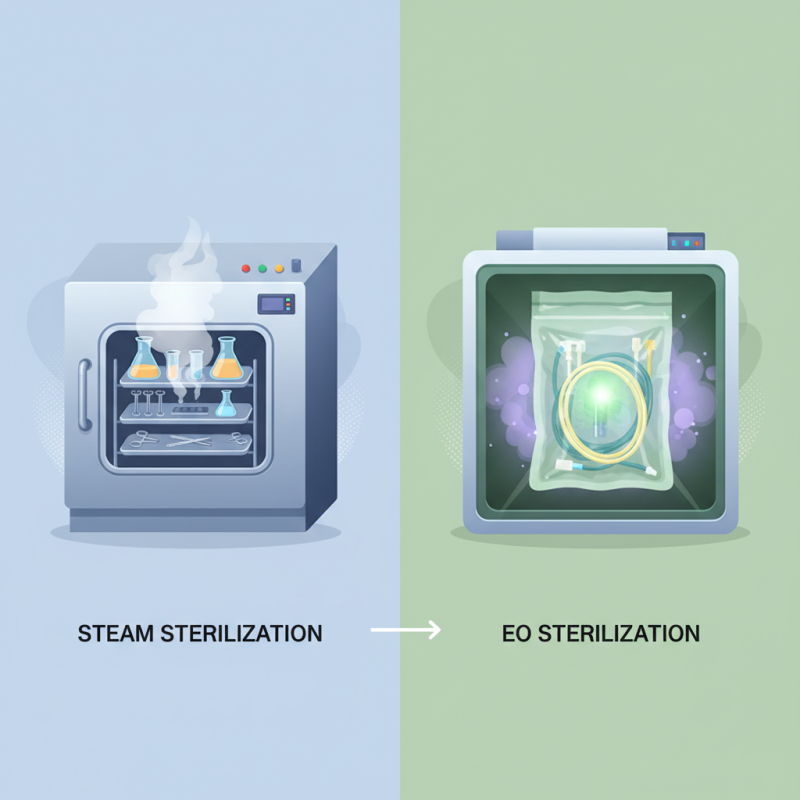
Steam sterilization is a widely used method in healthcare and laboratory settings. This process employs saturated steam to eliminate microorganisms, ensuring a sterile environment for medical instruments. The efficacy of steam sterilization relies on factors like temperature, time, and steam quality. Typically, this method operates at 121 to 134 degrees Celsius. It requires careful monitoring to maintain optimal conditions.
It's crucial to understand the mechanics behind steam sterilization. The steam penetrates the items being sterilized, displacing air trapped in the packaging. This process creates a moist environment, necessary for the destruction of pathogens. However, improper loading can lead to ineffective sterilization. Air pockets can form, trapping contaminants. Regular training and adherence to protocols can mitigate these risks.
Nonetheless, steam sterilization is not without limitations. Some materials cannot withstand high temperatures and moisture. This can complicate sterilization choices. Understanding the specific requirements of each item is essential. Not all items will have the same response to steam exposure. Continuous assessment of procedures is necessary to ensure effective outcomes.
Ethylene oxide (EO) sterilization is a widely used method for sterilizing heat-sensitive medical equipment. The process relies on ethylene oxide gas, which penetrates porous materials and effectively eliminates microorganisms. This makes EO particularly useful for items that cannot withstand high temperatures associated with steam sterilization.
EO sterilization involves several key principles. The gas interacts with the microbial DNA, disrupting its function. The process is typically carried out in a controlled environment, where temperature and humidity are carefully monitored. This ensures that the gas can penetrate effectively and kill the microorganisms. However, the procedure requires lengthy aeration times to remove residual EO, which can be a drawback.
Tips: Ensure proper aeration of EO-treated items. This is crucial to eliminate any remaining gas and avoid potential health risks. Always follow strict guidelines during the sterilization process to maintain efficacy. Not all materials are suitable for EO sterilization, so verify compatibility with specific products to avoid damaging them.
When it comes to sterilization processes, steam and ethylene oxide (EO) offer distinct methods.
Steam sterilization utilizes high-pressure steam to kill microorganisms effectively. This process is fast, typically completed in around 30 minutes.
It is ideal for heat-stable instruments and items. However, it may not be suitable for moisture-sensitive materials.
In contrast,
EO sterilization employs gas for materials that can't withstand heat. This method operates at low temperatures, making it effective for delicate devices.
The cycle can take several hours, including aeration. This allows the gas to dissipate, ensuring safety.
Nonetheless, the process does require careful monitoring due to the toxic nature of EO.
Both methods have their pros and cons. Steam can damage some materials, while EO may leave residues. Understanding these differences helps in choosing the right sterilization method for specific needs. Balancing efficiency and material safety is critical in healthcare settings.
Steam sterilization is a widely used method for killing microorganisms. It operates using saturated steam at high temperatures, typically around 121 to 134 degrees Celsius. This process is effective against bacteria, viruses, and spores. According to the Centers for Disease Control and Prevention (CDC), steam sterilization can achieve a log reduction in bacterial counts, crucial for ensuring medical device safety.
However, steam sterilization has some limitations. For instance, it cannot be used for heat-sensitive materials, such as certain plastics or electronics. Research indicates that around 10% to 20% of sterilization failures in hospitals can be traced back to improper procedures or equipment malfunctions. Steam condensation must occur correctly for effective sterilization; otherwise, microbial resistance increases. Furthermore, the presence of biofilms can hinder steam's access to certain surfaces.
Despite these drawbacks, steam sterilization is still favored for many applications, particularly in healthcare settings. Its advantages include being environmentally friendly and cost-effective. It requires less energy than some alternative sterilization methods, leading to better operational efficiency. Nonetheless, facilities must regularly monitor and evaluate their sterilization protocols. Continuous improvement is necessary to address issues that might arise during the process. Data from recent industry reports underline the importance of maintaining stringent standards to prevent contamination risks.
This chart illustrates the key differences between Steam and EO Sterilization across several dimensions: Effectiveness, Time Required, Material Compatibility, Cost, and Environmental Impact. Both methods have their advantages and limitations, which are highlighted in the respective data points.
Ethylene oxide (EO) sterilization is a commonly used method in healthcare. It offers unique advantages, especially for heat-sensitive medical devices. EO effectively penetrates packaging materials, ensuring comprehensive sterilization. According to a report by the American Society for Microbiology, EO is capable of achieving a 6-log reduction in microbial load, making it a reliable option for critical instruments.
However, there are notable limitations to EO sterilization. The process requires a long exposure time, typically ranging from 6 to 24 hours. This extended duration can delay the availability of sterilized products. Additionally, EO is considered toxic and potentially carcinogenic, raising safety concerns. A study published in the Journal of Medical Devices highlighted that improper aeration can leave residual EO, which may pose risks to patients and staff.
Moreover, the environmental impact of EO emissions cannot be ignored. Regulation limits the release of EO into the atmosphere, creating challenges for facilities. Some hospitals report difficulties meeting these commitments while maintaining a sterile environment. As such, healthcare facilities must weigh the benefits of EO against its limitations, striving for a balance that prioritizes patient safety and environmental health.
: Steam sterilization uses saturated steam to eliminate microorganisms on medical instruments.
Temperature, time, and steam quality are crucial for effectiveness.
Improper loading can trap air pockets, leading to ineffective sterilization.
Regular training ensures adherence to protocols, reducing sterilization risks.
Some heat-sensitive materials cannot withstand high temperatures and moisture.
EO gas penetrates porous materials and disrupts microbial DNA to eliminate microorganisms.
EO requires lengthy aeration to remove residual gas, posing potential health risks.
Not all materials can withstand EO, so verifying compatibility is necessary to avoid damage.
Steam sterilization is faster, typically completing in 30 minutes, while EO can take hours.
Temperature and humidity levels are critical for effective gas penetration and safety.
The article explores the key differences between steam and ethylene oxide (EO) sterilization methods. It begins by outlining the fundamental concepts behind steam sterilization, which utilizes high-temperature steam under pressure to effectively eliminate microorganisms. In contrast, EO sterilization relies on gas exposure at lower temperatures, making it suitable for heat-sensitive materials.
The comparison highlights the unique advantages and limitations of each process. Steam sterilization is generally quicker and more cost-effective but may not be compatible with all materials. On the other hand, EO sterilization is ideal for complex devices and materials that cannot withstand high temperatures, although it requires a longer processing time and careful handling due to the toxic nature of EO gas. Ultimately, understanding "what are the differences between steam and EO sterilization?" is crucial for selecting the appropriate method for medical and laboratory applications, ensuring both safety and efficacy.

Jalil Medical