China Top 10 Medical Sterilization Packaging Regulations?

Time:2026-10-08 Author:Sophia
0%

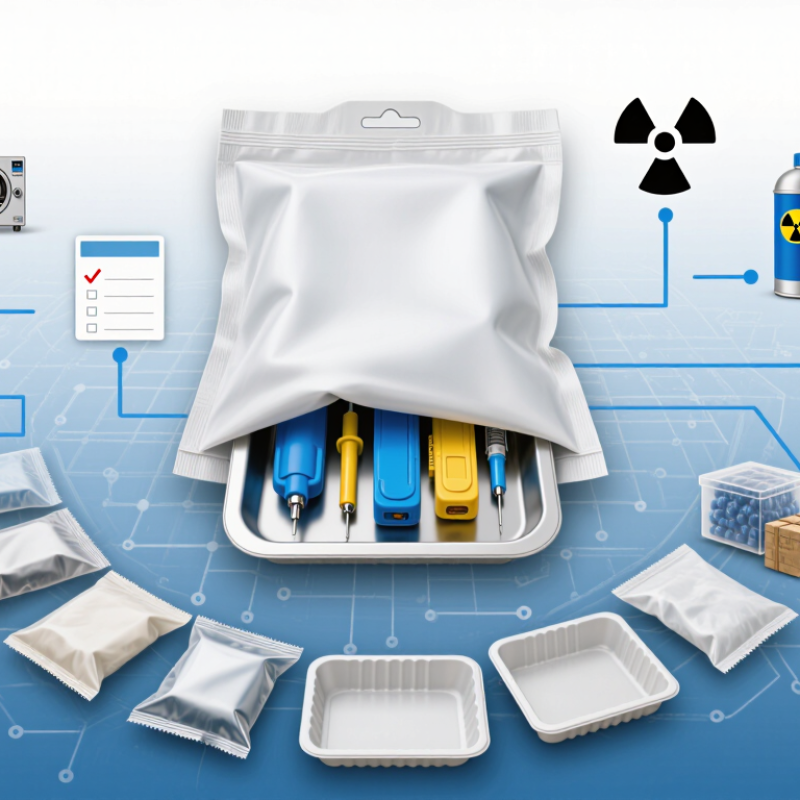
China’s medical sterilization packaging market is shaped by more than one rulebook. What regulations govern medical sterilization packaging? The answer depends on product risk, sterilization method, packaging materials, and market destination. In China, manufacturers must consider NMPA requirements, applicable national standards, and recognized international standards. ISO 11607 is central for packaging systems designed to maintain sterility until use. It addresses material selection, forming, sealing, and packaging-system validation.

The details become practical quickly. A sealed pouch may need documented seal strength, aging data, microbial-barrier evidence, and transport testing. Ethylene oxide packaging also requires compatibility with gas penetration, residual limits, and aeration conditions. Radiation packaging faces different dose and material-performance concerns. Steam sterilization can expose trays and wraps to heat, pressure, and repeated moisture. Small design choices matter. Ink can migrate. Seals can channel. A rigid tray can deform.

Thomas J. Dunn, a respected medical-device packaging specialist, has stated, “Packaging is a system, not a product.” That principle supports the approach behind this China Top 10 Medical Sterilization Packaging Regulations guide. It encourages manufacturers to connect packaging design with sterilization validation, production controls, labeling, and post-market monitoring. The process is rarely perfect. Standards may be interpreted differently across facilities, and a package that survives laboratory testing may fail during real distribution. Therefore, reliable compliance requires documented risk assessment, qualified suppliers, repeatable sealing processes, and evidence from actual transport conditions. The strongest programs remain open to review, especially when materials, equipment, or sterilization cycles change.
China Top 10 Medical Sterilization Packaging Regulations?

What Medical Sterilization Packaging Regulations Cover in China

China’s medical sterilization packaging rules cover more than sealed pouches. They connect product registration, materials, sterilization, labeling, and distribution controls. The NMPA 2023 Statistical Bulletin reported more than 32,000 medical-device manufacturers in China. That scale makes consistent packaging evidence essential.

The practical scope includes ten areas: packaging design, sterile-barrier materials, seal strength, microbial-barrier performance, compatibility with sterilization, aging studies, transport testing, production hygiene, labeling, and traceability. GB/T 19633.1 and GB/T 19633.2 align closely with ISO 11607 principles. The YY/T 0681 series supports test methods for seal integrity, package strength, and accelerated aging. NMPA technical reviews commonly expect evidence that packaging protects the device through sterilization, storage, shipping, and opening.

Details matter. A paper-plastic pouch may pass a seal test yet fail after repeated temperature changes. One weak assumption remains. A clean package is not automatically a sterile package. Validation should use the actual device, materials, sealing equipment, and sterilization cycle. Labels should identify sterility status, expiry information, packaging damage warnings, and opening instructions in Chinese where required. NMPA registration dossiers should also explain packaging changes, because a film substitution can affect seal performance and shelf life. Industry analyses from Smithers continue to identify sterile-barrier integrity as a major medical-packaging risk, while sustainability claims still require practical evidence.

China’s Top Ten Rules for Medical Sterilization Packaging

China’s top ten rules for medical sterilization packaging begin with risk control.

Define the device, sterilization method, and sterile barrier before selecting materials. Use packaging materials qualified for medical contact and the intended sterilization cycle.

Control cleanliness, humidity, and storage conditions during production. Validate the sealing process, including temperature, pressure, dwell time, and seal width.

Inspect every seal for channels, wrinkles, burns, and incomplete closure. Small defects matter.

Sterilization validation must match the chosen process, such as moist heat, ethylene oxide, or radiation. Packaging performance should be tested after sterilization, handling, aging, and simulated transport.

Confirm that the package protects sterility until opening. Labels should show batch information, sterilization status, expiry details, and opening direction where required.

Maintain traceable records for materials, operators, equipment, test results, and distribution. These practices should align with applicable Chinese NMPA requirements and relevant GB and YY standards, including standards covering terminally sterilized medical-device packaging.

A practical review should also examine warehouse stacking, transport vibration, and temperature exposure. Records matter.

Teams sometimes trust a clean seal without testing its strength, which is a preventable weakness. No checklist is perfect.

Engineers should reassess packaging after design changes, supplier changes, sterilization changes, or repeated complaints. Independent laboratory testing can strengthen evidence, but internal experience remains valuable when documented clearly and reviewed by qualified personnel.

Packaging Materials, Design, and Performance Requirements

China Top 10 Medical Sterilization Packaging Regulations: Packaging Materials, Design, and Performance Requirements

Medical sterilization packaging must protect sterility until the point of use. ISO 11607-1 requires materials to support sterilization, storage, transport, and aseptic opening. The ten practical controls include material compatibility, microbial barrier, seal integrity, peel performance, cleanliness, biocompatibility, dimensional stability, aging, transport resistance, and process validation. Paper, film, Tyvek-like nonwoven materials, and rigid trays need different evidence. FDA reports that ethylene oxide sterilizes about half of medical devices requiring sterilization in the United States. Packaging must therefore tolerate gas exposure, humidity, and aeration without harmful residues.

Design decisions also need measurable proof. ISO 11607-2 addresses forming, sealing, and assembly processes. ASTM F88 can measure seal strength, while ASTM F1929 and F2096 help detect channel leaks and gross leakage. Accelerated aging may support shelf-life claims, but real-time aging remains important. A 2024 industry packaging report noted that sterile barrier demand is rising with procedure volumes, yet many failures still occur during distribution. This is a useful warning. A strong laboratory seal can fail after vibration, compression, or temperature changes.

Tips: Keep the seal away from folds, labels, and sharp edges. Record sealing temperature, pressure, and dwell time. Test the hardest package configuration, not only the easiest sample. Inspect peel behavior visually and mechanically. Do not assume one sterilization cycle fits every material. A small gap may matter. Recheck suppliers, because material changes can quietly alter performance.

China Top 10 Medical Sterilization Packaging Regulations? – Packaging Materials, Design, and Performance Requirements
No. Regulatory or Technical Area Applicable Packaging Dimension Key Requirement in China Typical Compliance Evidence Regulatory Status
1 Sterile Barrier System Design Packaging architecture and protection of the sterile device The sterile barrier system shall be designed to maintain sterility until the point of use, permit aseptic presentation, and provide adequate protection against physical damage. Packaging materials, components, and configurations shall be suitable for the device and its intended sterilization process. Packaging drawings, material specifications, risk analysis, sterile-barrier rationale, and package performance test reports. Core Standard
2 Packaging Materials Paper, nonwoven materials, polymer films, trays, lids, pouches, and protective packaging Materials shall be compatible with the medical device, sterilization method, storage conditions, and distribution environment. They should not adversely affect device safety, functionality, cleanliness, or biocompatibility. Supplier specifications, certificates of analysis, material identification, chemical characterization where relevant, and compatibility studies. Core Standard
3 Sterilization Compatibility Steam, ethylene oxide, radiation, and other validated sterilization processes The complete packaging system shall permit the sterilizing agent to reach the required surfaces and shall continue to perform after exposure. The package shall not create unacceptable changes such as melting, embrittlement, delamination, loss of seal strength, toxic residues, or excessive deformation. Sterilization-cycle development data, pre- and post-sterilization inspection, seal-strength results, integrity testing, and residual or material-impact assessment when applicable. Core Standard
4 Forming, Sealing, and Assembly Validation Thermoforming, pouch production, lid sealing, closing, and other packaging operations Critical packaging processes shall be validated under defined operating ranges. Equipment settings, sealing temperature, pressure, dwell time, forming conditions, and process monitoring requirements shall be established and controlled. Installation, operational, and performance qualification records; approved process parameters; work instructions; equipment calibration; and process-validation reports. Core Standard
5 Seal Strength and Seal Quality Heat-sealed pouches, header bags, trays, lids, and other closed sterile barriers Seals shall be continuous, uniform, and sufficiently strong for handling, sterilization, transport, storage, and aseptic opening. The seal should not show channels, wrinkles, burns, incomplete bonding, adhesive failure, or particulate contamination that could compromise the sterile barrier. Seal-strength testing, visual inspection criteria, seal-width measurements, burst or creep testing where appropriate, and validated sampling plans. Performance
6 Package Integrity and Microbial Barrier Pre-sterilization and post-sterilization package integrity The packaging system shall prevent ingress of microorganisms and maintain integrity throughout sterilization, handling, distribution, and the claimed shelf life. Test methods shall be appropriate to the package design and the potential failure modes. Dye penetration, bubble emission, gross-leak, microbial-barrier, or other validated integrity tests selected through risk assessment. Performance
7 Distribution and Transportation Performance Shipping cartons, protective packaging, unit packages, and sterilized finished packs The packaging system shall protect the device and sterile barrier from hazards reasonably expected during transportation and handling, including vibration, compression, shock, drop, stacking, and environmental changes. Distribution simulation or transport testing, package inspection before and after testing, and documented acceptance criteria linked to the intended distribution system. Performance
8 Accelerated Aging and Shelf-Life Validation Sterile barrier integrity and package performance during storage The claimed shelf life shall be supported by stability data demonstrating that the package continues to meet integrity, seal, material, labeling, and functional requirements under specified storage conditions. Accelerated aging may support an initial claim but should be followed by real-time aging confirmation. Aging protocol, temperature and humidity records, aged-package integrity and seal-strength results, visual examination, and real-time aging plan or data. Performance
9 Biological and Chemical Safety Packaging materials that contact the device, patient, user, or sterilizing residues Packaging materials and process residues shall not introduce unacceptable biological or chemical risks. Where contact or exposure is relevant, evaluation should address cytotoxicity, sensitization, irritation, chemical characterization, extractables, leachables, and sterilant residues as applicable. Biological evaluation plan, chemical characterization, toxicological risk assessment, sterilant-residue testing, and supplier change-control documentation. Risk-Based
10 Registration, Technical Documentation, and Labeling Medical-device registration or filing dossier and package labeling Packaging specifications, sterilization method, sterile-barrier information, shelf life, storage conditions, and relevant validation evidence shall be consistent with the product technical documentation and approved labeling. Changes to packaging materials, design, sealing process, or sterilization conditions shall be assessed through change control and may require regulatory evaluation. Product technical requirements, packaging drawings, validation reports, risk-management records, change-control assessments, inspection specifications, and approved instructions or labels. Regulatory

Main Chinese references include GB/T 19633.1-2015, GB/T 19633.2-2015, the YY/T 0681 series, applicable GB/T 16886 biological-evaluation standards, and current National Medical Products Administration requirements for medical-device registration, filing, instructions, and labeling. Applicability depends on the device classification, packaging configuration, sterilization method, intended use, and current regulatory revision.

Sterility Validation, Quality Control, and Testing Procedures

China Top 10 Medical Sterilization Packaging Regulations?

Sterility Validation, Quality Control, and Testing Procedures

Medical sterilization packaging requires documented evidence, not attractive materials alone. Manufacturers should align packaging work with applicable Chinese requirements and recognized international standards, such as ISO 11607. Current regulatory expectations must be checked for each product and sterilization method. Requirements may differ by device category, risk level, and market pathway.

Validation begins with material qualification, seal strength, and microbial barrier performance. Teams should define measurable acceptance criteria before testing starts. Sterilization cycles need documented process parameters, including temperature, exposure time, humidity, or radiation dose. Packaging samples should represent routine production, including the weakest expected seal. That detail matters.

Testing should include visual inspection, dye penetration, bubble leakage, seal integrity, and package-opening evaluation. Distribution simulation can reveal crushed corners, channel leaks, and hidden delamination. Accelerated aging may support shelf-life estimates, but real-time aging remains important. Bioburden and sterility testing should follow approved procedures with controlled sampling and traceable records.

Quality control also depends on calibrated equipment, trained operators, environmental monitoring, and strict change control. Every failed sample deserves investigation. Repeating the test without finding the cause is not strong validation. Sometimes the packaging passes in the laboratory but fails during transportation. That gap requires honest review. Validation reports should explain deviations, statistical reasoning, and corrective actions clearly. A practical weakness remains common: teams may test the package alone, although the complete device, sterilization load, and shipping conditions can change the final result.

Registration, Labeling, Traceability, and Regulatory Compliance

China Top 10 Medical Sterilization Packaging Regulations?

Medical sterilization packaging in China requires more than a sealed pouch. Registration, labeling, traceability, and documented validation must work together. Manufacturers should identify the product classification and submit packaging information through the applicable NMPA registration or filing pathway. Packaging materials, dimensions, sealing methods, and sterilization compatibility should match the approved technical documentation. Changes may require regulatory assessment before implementation.

Labeling must be accurate, legible, and consistent with the registered product information. Important details often include product name, model, specification, sterilization method, sterilization status, production date, expiry date, batch number, storage conditions, and manufacturer information. Chinese labeling is essential for products placed on the domestic market. Where applicable, UDI requirements should also be reviewed. Small errors matter.

Traceability should connect raw materials, packaging lots, sealing records, sterilization cycles, release decisions, and distribution data. Packaging performance should be verified through suitable tests, such as seal strength, integrity, aging, and transport simulation. Applicable Chinese standards, including relevant GB/T and YY/T series, should be checked against the current regulatory status. In practice, companies sometimes validate the pouch but overlook carton handling or warehouse humidity. That gap deserves attention. Records must remain clear, retrievable, and protected from unauthorized changes. A strong system also includes complaint handling, recall readiness, supplier qualification, and periodic review of packaging performance.

China Top 10 Medical Sterilization Packaging Regulations

Registration, labeling, traceability, sterilization validation and regulatory compliance framework

This timeline presents ten core Chinese regulations and national standards relevant to medical sterilization packaging. The year indicates the original issuance or current edition year shown in the instrument title. Medical device manufacturers and importers should verify the latest amendments, implementation notices and applicable product-specific requirements before market access.

Sources: State Council Regulation on the Supervision and Administration of Medical Devices, Order No. 739; NMPA Orders No. 47, 53, 54 and 6; GB/T 19633.1-2015; GB/T 19633.2-2015; GB 18278.1-2015; GB 18279.1-2015; GB 18280.1-2015.

FAQS

What must medical sterilization packaging protect?

It must maintain sterility until the device is opened. It should tolerate sterilization, storage, transport, and aseptic opening. A tiny gap can matter.

Which packaging materials need different evidence?

Paper, flexible film, nonwoven material, and rigid trays behave differently. Each material needs compatibility, barrier, sealing, and aging evidence. One test rarely fits every material.

How should seal performance be evaluated?

Measure seal strength and inspect peel behavior. Check for channel leaks, gross leaks, wrinkles, and weak corners. Keep seals away from folds and sharp edges.

Why are sterilization cycles important for packaging?

Materials must tolerate heat, gas, humidity, or radiation exposure. Record temperature, exposure time, humidity, or dose. Do not assume one cycle suits every material.

What should packaging validation include?

Validation should cover materials, seals, microbial barriers, transport, aging, and opening performance. Use routine production samples, including the weakest expected seal. Attractive packaging is not enough.

Why is transportation testing necessary?

Vibration, compression, and temperature changes can damage a laboratory-approved seal. Test crushed corners, hidden delamination, and leaks. Distribution is often the uncomfortable reality check.

What information should packaging labels contain?

Labels may include the product description, model, sterilization method, status, dates, batch number, and storage conditions. Text must remain legible and consistent. Small errors matter.

How can manufacturers maintain traceability?

Link material lots, sealing records, sterilization cycles, release decisions, and distribution data. Keep records retrievable and protected from unauthorized changes. Missing links weaken confidence.

What happens when a package test fails?

Investigate the cause instead of simply repeating the test. Review equipment, operators, materials, settings, and transport conditions. A passing retest alone may prove very little.

Should the package be tested separately from the medical device?

No. The complete device, sterilization load, and shipping conditions can change performance. Testing only an empty pouch may create false confidence. That weakness deserves review.

Conclusion

China’s medical sterilization packaging framework covers the full life cycle of packaging used to maintain sterility, from material selection and package design to production, validation, distribution, and post-market monitoring. What regulations govern medical sterilization packaging? In practice, manufacturers must align packaging systems with applicable medical device requirements, ensuring that materials are safe, compatible with the sterilization method, and capable of protecting contents throughout storage and transportation.

The article presents ten key regulatory considerations, including packaging materials, seal and closure design, barrier performance, process control, sterilization compatibility, and package integrity testing. It also explains the importance of documented sterility validation, quality control procedures, aging and transport assessments, and traceable records. Finally, registration documentation, labeling, instructions for use, lot identification, and change management are reviewed to show how manufacturers can demonstrate consistent compliance and preserve product safety throughout the supply chain.

Sophia

Sophia

Sophia is a dedicated marketing professional with an exceptional depth of knowledge about her company's products and services. With a keen understanding of market trends and customer needs, she crafts insightful blog posts that not only inform but also engage readers, enriching the company’s online......